The bus

“The bus” is a central figure in a methodology for collective inquiry that emerged as a response to the need for difficult, honest and sober conversations where the integrity of relationships are prioritized above the emotional charge of the content being discussed. The methodology is being tested by our research group as a container for conversations about colonial continuities and decolonial possibilities.

The basics

“The bus” has a structure of four decks or levels of engagement. The first deck is the most basic. The narrative below is an example of what would be used to create and hold the space for this methodology with a group of participants.

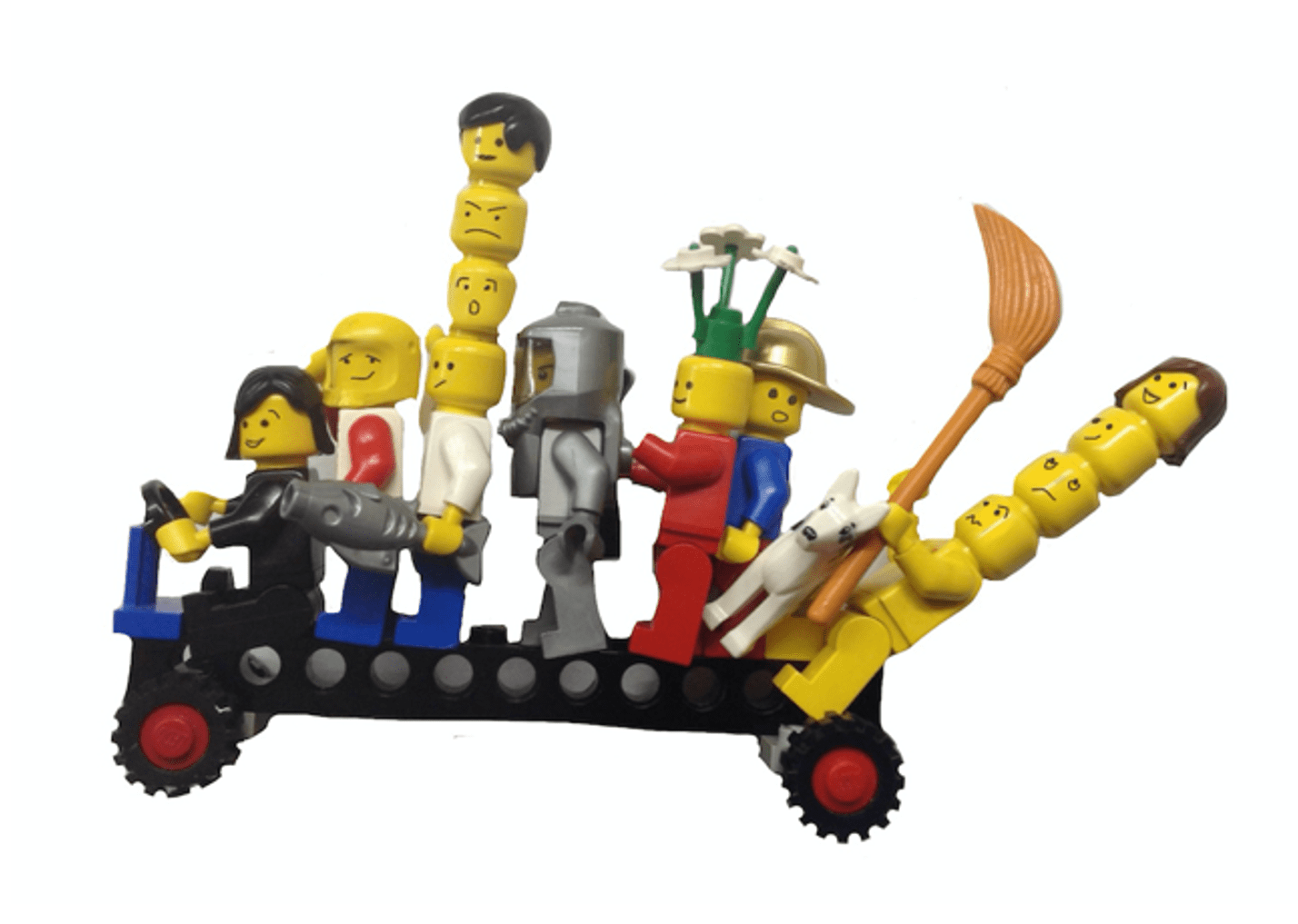
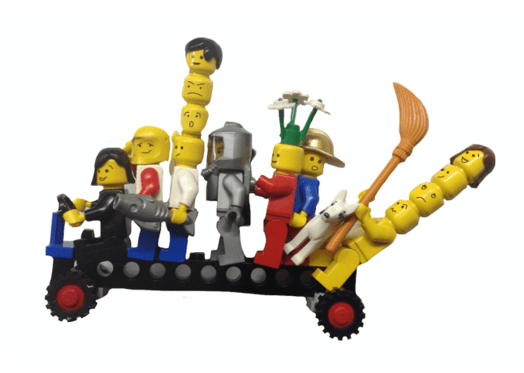
Imagine everyone in the room as single deck buses full of passengers of different ages. In each bus, there is a driver, passengers gathered at the front, in the middle and at the back. On your own bus, there are passengers you know and passengers you don’t know. There are passengers who are drawing your attention, others who want to hide from you. In this space, any encounter between individuals will be an encounter of “buses”. The point of this first exercise is to learn to observe and sit with the people on your bus, without judgement. In order to create the conditions for this to happen, you will be shown a bus-response-inducing stimulus and be asked to draw your bus focusing on three passengers within it that call your attention: one at the front, one in the middle and one at the back. You will register what each passenger is saying with a speech bubble, a thought bubble and a heart bubble, representing what is being said, what is being thought (and why) and what is being felt and anticipated (e.g. hopes, attachments, fears and anxieties). You will be given sometime to sit with what is happening on your bus and to observe what is happening with the process of observation. In relation to your passengers, pay attention to their age and form (are they human?), whether there is trauma involved, their level of tolerance for uncertainty and their response to being observed. In relation to your own observation (you observing yourself observe), pay attention to your relationship to the activity itself: are you worried about following instructions accurately? are you adapting the task? are you distracted? are you resisting it? There is no right or wrong here, just observe.
lego bus


Next you will be asked to sit in pairs to share what you want to share in relation to what you have learned from your observations. It is important to emphasise that you are not being asked to describe what is happening on the bus or in the observation itself, but what you are learning about the bus and the process of observation in general terms. You can use your drawing as an example if you want, but the focus of the conversation needs to be meta-analytic (related to the process of learning itself) and not confessional (related to yourself). Then, you will be asked to sit in groups of four and report on what you are learning from listening to other people’s reports of their learning. Finally you will be invited to share with the group 1. one thing that may have surprised you and 2. the current state of your bus: whether things seem a)ok, or b)things are being processed, or c)if there is something “burning” that needs to be expressed or vented. If we take the metaphor of the bus further, sometimes, when the bus is travelling too fast or through winding or rocky roads, individual passengers can become nauseous and therefore the bus needs to stop so that they can “vomit”. In this methodology, the “holding the (vomit) bucket” phrase is used as an invited agreement for non-judgemental listening of something you may not completely identify with (within your bus), but that needs to be expressed. If you ask for “the bucket”, we will check with the group if people are ok with listening to something potentially triggering without judgement and without being triggered. Those who feel that they may be triggered at that moment (regardless of the reason) may choose to leave the space for a while.


The other decks

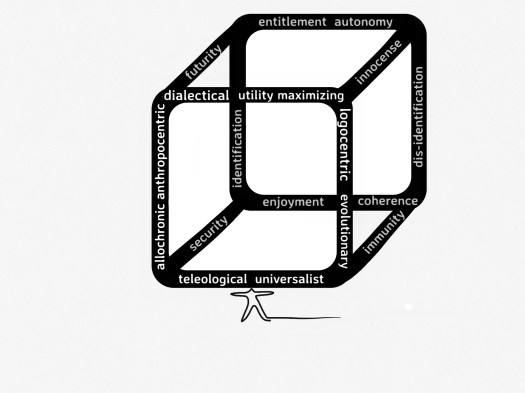
“The bus” can also be conceptualized as a four deck vehicle representing four layers of selfhood: 1)me, 2)me and you, 3)me in you, and 4)neither me nor you (“us” in an “I” beyond form and time). The first, basic layer of the bus represents one lifetime of a self within a bounded body: all the experiences of one’s embodiment in flesh, time, and space. Therefore, within “the bus” a person would find aspects of the psyche related to hers/his responses to being socialized within their social groups. On the second deck of the bus (me and you), a person would find the communities they have a connection with also within the bus (both positive and negative connections). On the third deck of the bus, there is one living organism, consisting of different cells and organs known and unknown in different forms. The larger organism metaphor (represented by planet earth) emphasizes co-constitution, co-dependency, co-vulnerability, entanglement beyond what can be cognitively registered, as well as a larger temporality where responsibility extends beyond one’s species and lifetime. The fourth deck of the bus (neither me nor you) represents a metaphysical level of selfhood beyond time and space, that exists alongside the different temporalities and embodiments represented on the other decks and that stands for the co-constitution of death and creation, shadow and light as the source of both destruction, creativity and possibility.

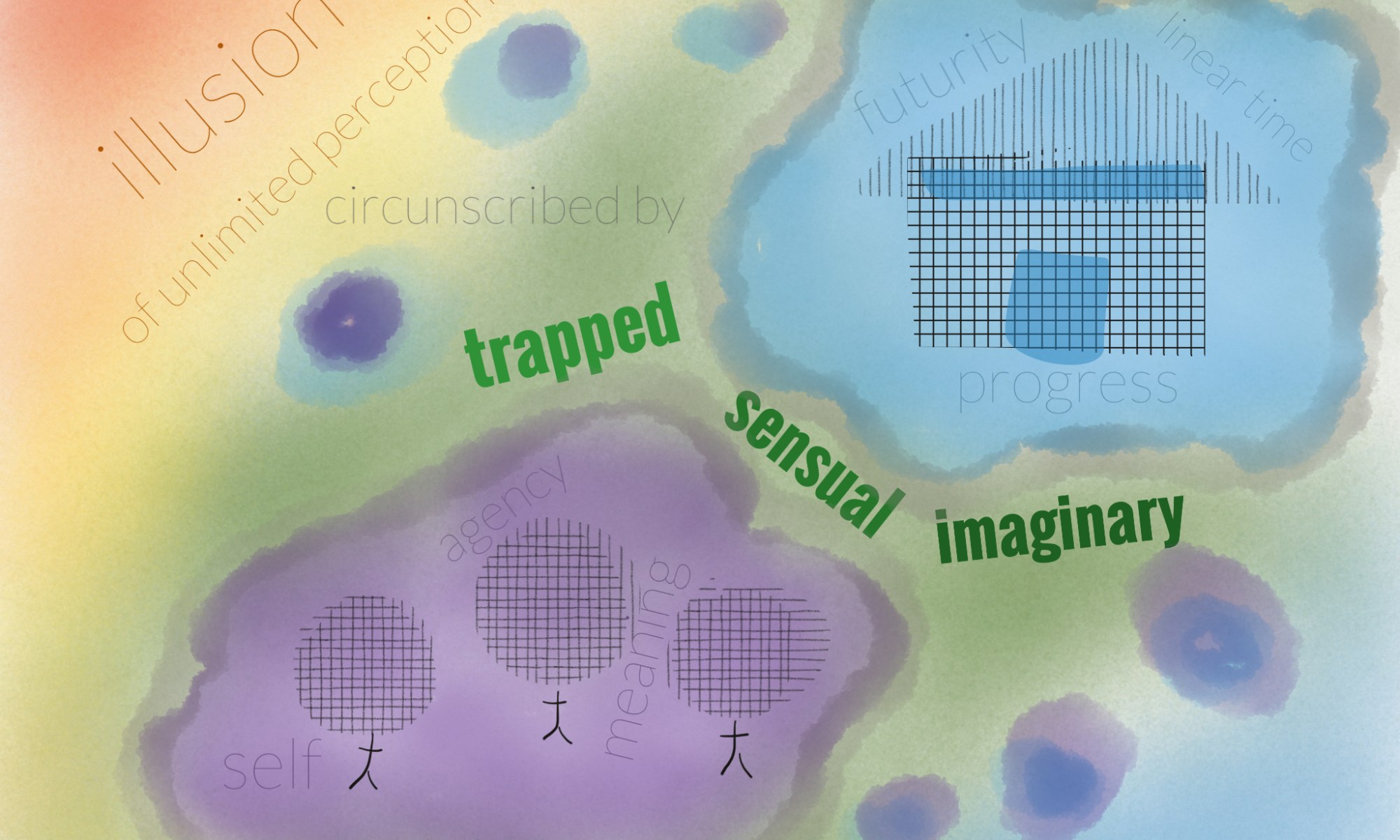
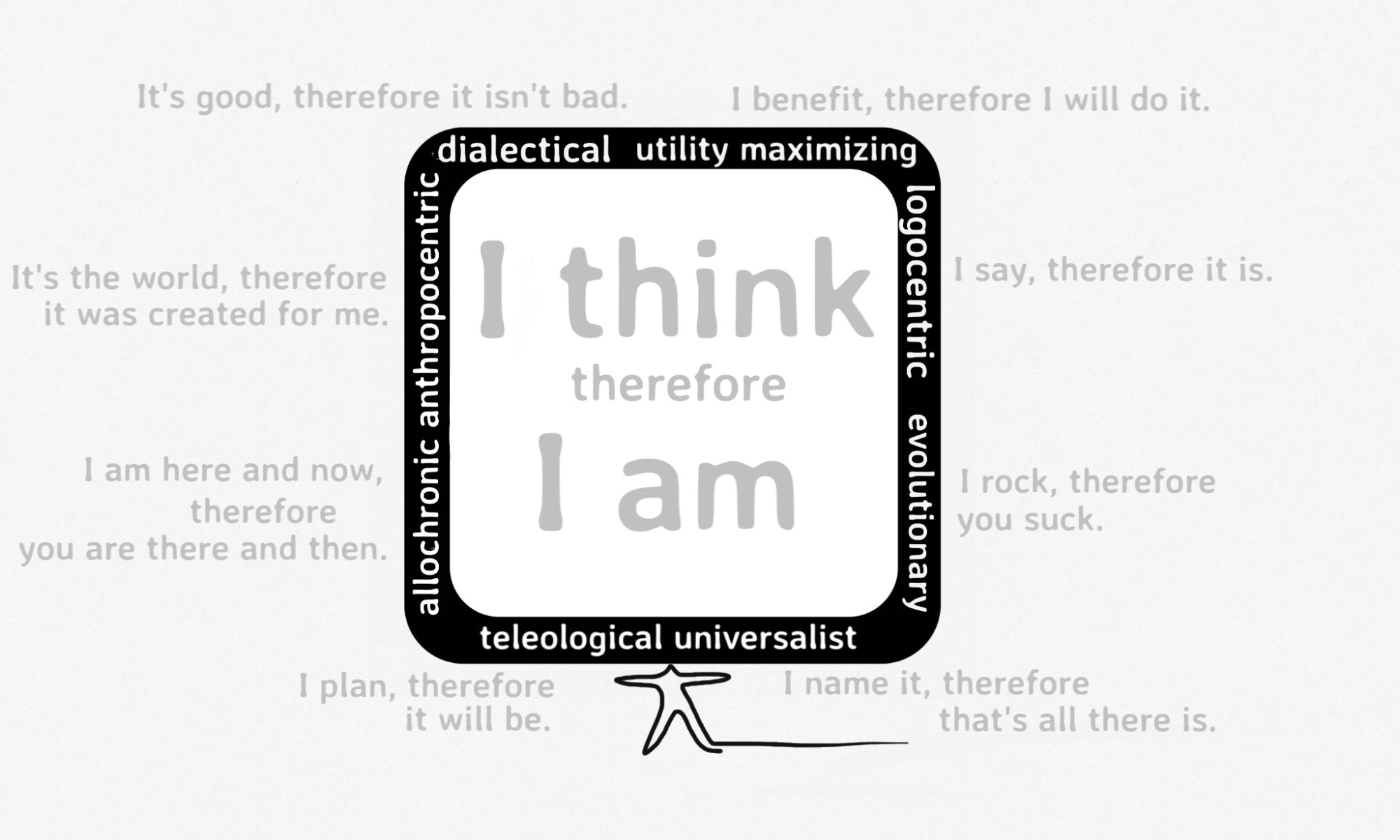
It is emphasized that our modern socialization has given us language for decks 1 and 2, but has stripped us of language for decks 3 and 4. This is partly due to the fact that the Enlightenment legacy of this socialization attempts to reduce being to knowing and knowing to controlling (I think therefore I am), while decks 3 and 4 represent being that cannot be reduced to knowing and that are beyond human control. This desire for control also affects the quality of language used to describe and manage decks 1 and 2, what we call “thick language”. Thick language works like a heavy blanket that tries to envelope and restrict the movement of the world into fixity in meaning. In contrast, thin language works like a veil that allows for flow, flexibility, mobility and play of meanings, in the understanding that meaning, although necessary, cannot apprehend reality and that being cannot be reduced to knowing: the world cannot fit any box. Work on decks 3 and 4 necessarily require “thin language”. If “thick language” is used, these decks are captured back in boxes that will tend to be defended and protected as the “truth”, in efforts steaming from desires to eliminate uncertainty and indeterminacy.

If the bus decks are introduced in a collective inquiry, participants are asked to pay attention to which deck they are called to attend to, and to develop more familiarity with the decks they have not been encouraged to explore.

Academic talk

This methodology is counter-intuitive because our social experience demands and rewards displays of coherence, self-transparency, purity and control, therefore most of us have not been encouraged and are not used to talking about internal complexity, diversity or contradictions. As we do not have a established vocabulary to express these aspects of the self, we tend to repress them. When we repress something we dis-identify with within ourselves, we will tend to project it outward, as a trait we don’t like in others and sometimes this is perceived as a threat, prompting justifications for hate and even extermination. In other words, if we cannot sit with our own complexity and indeterminacy, we will not be able to sit with the complexity and indeterminacy of the world around us. The denial of these complexities and fear of the unknown create a desire to make the world fit in a box of certainties that offer us (false) securities and creates harmful projections and unrealistic expectations that are very damaging to our relationships. Our attachments to the illusion of control over these boxes and fears of the unknown and of uncertainty create the fragilities that make it almost impossible for us to not want to control our lives, relationships and each other. Trust becomes conditional on predictability and affirmation (of boxes). Therefore conversations that expose what does not fit in or that which is hurt by the boxes we hold dear in order to feel safe, break the agreement of predictability and affirmation and are perceived as uncomfortable, threatening or (self)destructive.

Depending on how the methodology is used and experienced, the figure of “the bus” can support individuals and groups

  • to register experiences of selfhood beyond meaning inscribed in self-image, identity, and codified understanding
  • to examine the affective dimension of our relationship with knowledge and knowledge production
  • to face and sit with paradoxes, contradictions, complexities and diversities internal to the self
  • to identify the relationship between external social demands and individual affective, intellectual and subsistence investments
  • to observe the symptoms and effects of one’s attachments to coherence, authority, certainty, virtue, mastery, leadership, superiority and control
  • to articulate and assess projections and unexamined compensatory patterns of addiction
  • to build stamina to engage productively and agonistically with dissonance, dissensus, complicity, conflict, ambivalence, divergence, indeterminacy, and imcommensurability
  • to develop dispositions of self-permeability and affectability where relationships not mediated by knowledge or desires for identification or dis-identification
  • to discern between wants and needs and their sources
  • to reduce collective anxieties and to transform conflict into generative experiences


Text: pedagogy of attunement

In this historical time, we have learned to think about education in association with the transmission or production of knowledge: what is known and what is knowable. This tendency has been normalized through the Western Enlightenment, which is centered on the idea that being is about knowing (I think therefore I am) and that knowing is about meaning. Therefore, very rarely we encounter institutionalized forms of education that are about exploring the relationship we establish with knowledge, with knowledge production, with meaning making, and with what is unknowable and/or unimaginable. The educational experiments described in this section are grounded on a more ancient notion that asserts that being cannot be reduced to knowing and that both being and knowing exceed meaning.

These experiments are meant to deepen our experiences of “entanglement”, both within and beyond codified language. We define entanglement not as something that “exists”, but something that “insists” that we are all interwoven within a wider metabolism. From this perspective, it is impossible to define entanglement in “thick” language – language that attempts to capture reality in place. That is why we use the “thin” sensorial language of metaphors in an attempt to gesture towards it. For example, we can talk about entanglement as a visceral sound, in between and within everything, something that moves, and that gets us moving: the sound where ontogenesis (the birth of the possibility of possibilities) happens. As a timeless song, it reminds us that being cannot be reduced to knowing and that we are neither autonomous or separate.

In this sense, entanglement is not an intellectual choice, an allocation of will, an innocent space of virtue or beauty, a codified spirituality or a dialectical negation of separability. Entanglement commands a different level of “impossible” responsibility for the whole shebang– for everything, all the time. This responsibility is the reason why, perhaps, entanglement does not register in the frequency of rage, fear, control, vanity, righteousness, purity, sanctimony, or self-congratulatory avant-guardism. The insistence of the song of entanglement shows that the ways of knowing and being that have enabled the current system so far, grounded on separability, sovereignty and superiority, are reaching their limits and are not going to be able to provide direction for new horizons of possibility. However, since we are deeply embedded in the current system, we cannot simply jump beyond separability and existing horizons into something new without first digesting the lessons from the old and facing and composting its waste. Since listening to the song of entanglement is a difficult challenge today, the pedagogy in the experiments described in this section is one of attunement, of resetting and recalibrating our affective, intellectual and relational reception and broadcasting dials, putting them at the service of what needs to happen next, without pre-determining the outcomes.

The pedagogy of attunement issues two invitations: 1)taking a step back to examine the discursive regimes of visibility, intelligibility and affectability that police the boundaries of your imagination (the analectic dimension), and 2)exploring the terms that enable/disable the folding/unfolding of existing and new possibilities (the dimension of ontogenesis). The first invitation, the analectic dimension (as opposed to dialectic), involves overcoming the fragilities that prevent us from facing our complicities in harm, and working through the dis-illusionments involved in interrupting our satisfaction with and investments in harmful intellectual, affective and material economies. The second invitation, the dimension of onto-genesis, involves developing the stamina for the long-haul of facing the difficulties, uncertainties, and paradoxes of ‘hospicing’ a system in decline and assisting with the birth of something new, undefined, and potentially (but not necessarily) wiser.

Through the pedagogy of attunement, we are invited to activate our capacity to experience that which exceeds what is intelligible, to imagine beyond categories of thought and affective entrapments, to acknowledge the inevitability of pain, death and (re)birth, and to “sit with” the passion and the pain of the world without the need for identification and/or dis-identification. This involves looking in the mirror and not turning away when facing both the beauty and ugliness of humanity in each of us, through a deep recognition of our entangled vulnerabilities: our strengths and precariousness, gifts and manure, light and shadow, capacity for love and violence, and, crucially, our own arrogance, muck and contradictions.

If we are indeed “entangled”, part of a wider metabolism and metaphysics that cannot be captured or fixed in meaning, the first thing we need to do is to figure out what creates the illusion of separability, numbing ourselves to our sense of connectedness with each other. This is counter intuitive to our socialization in seeing meaning as a proxy for reality and the expectations that through meaning we can create unequivocal knowledge that will explain everything, fix everything, mediate our relationships, engineer the world, and give us a sense of hope, identity and purpose. This relationship with knowledge-in-meaning are the reason why we talk about meaningfulness as relevance and meaninglessness as pointlessness. Our sense of self-worth and belonging are also tied to these assumptions as we have been told that our legitimacy and status correspond to the amount of (sanctioned) intelligible knowledge we can (re)produce.

Rather than the traditional mode of education of filling a cup with more meaning/knowledge, this pedagogy is more about observing the cup, checking its contents, re-evaluating our identifications with it and experimenting with wordless knowing. The invitation is not to let go of meaning, knowledge or the cup, but to change our relationships with and expectations placed upon them. It works like an internal continuous “spring cleaning” that invites us to check and evaluate the usefulness of our intellectual “boxes”, of our affective “safety blankets”, of the “fences” we have created between us and the world, and of the “sugar addictions” of pleasures perceived as entitlements that distract us from a healthy co-existence and that have made the wider metabolism severely ill (possibly diabetic). Rediscovering our capacity to exist beyond boxes, blankets, fences, and sugar addictions requires an on-going process where we are constantly moving beyond the fragilities of epistemic certainty (where we hold on to these things), towards cognitive and affective reflexivity (where we get disenchanted and, ultimately disillusioned with the false promises and pleasures they offer us), and towards a (fleeting) state of onto-epistemic openness where we are comfortable with the discomforts of uncertainty, indeterminacy and affectability (all necessary for experimenting with something potentially “new”). Then we are back to certainty (although this time we know it is provisional), and the process starts again.

This translates into a gradual disinvestment in identity-brands of mastery, virtue, innocence, and heroism, and a re-investment in the decentering and disarming process of learning to be present to the uncertainties, difficulties and discomforts of working through complexities, paradoxes, different worldviews, and individual and collective traumas and delusions – not easy work. This is about the mobilization of intellectual accountability and existential surrender to enable existential accountability and intellectual surrender. Learning to digest together, we are encouraged to make different mistakes, to see failure as the greatest teacher, to find insight and revelation as sources of joy, and to recognize ourselves as both insufficient and indispensible within the wider metabolism.

Disclaimer for those thinking about trying it out: this pedagogy cannot be imposed on anyone because the irritations involved are considerable – people need to choose to do it with full awareness of its unavoidable side effects. On the one hand, working against the grain of what we have been told to expect in education (answers, models, methods, solutions, certainties, hope, happiness, redemption, coherence, progress, predictability, canonical figures, saviours and redeemers) inevitably involves discomfort, uneasiness, catharsis, anger, resistance, deception, disillusionment, inconsistencies, and failure. On the other hand, it may also lead to deeper insight, epiphanies, healing, better relationships, sensefulness (as opposed to meaningfulness), new ways of thinking, renewed creativity, reconnections, and new forms of joy, but there are no guarantees. This pedagogy does not offer you specific answers, but can help you become more comfortable with the discomfort of not having them. In its initial stages, this pedagogy requires someone to hold space who “lovingly does not care what you think or where you arrive at” (this is for you to decide) as s/he challenges, encourages and kindly pushes you to dig deeper into difficult and awkward places that you would not have willingly chosen to go. Once you learn the drill, you can take responsibility to push yourself there.

For those thinking of holding spaces for others: hosting this kind of space is about balancing a meta-bio-chemical equation of physiological-neurological, affective-intellectual responses. It is like trying to conduct a neural/endocrinal orchestra to perform a “song” of responsibility before will. The tuning of each instrument is an “un-coercive rearrangement of desires” at the interface between what is conscious and unconscious. Metaphors work as sensorial switches in that interface. Since “art” is the authorized space for this kind of work in modern societies, this pedagogy can be described as “artistic” as its vocabulary consists mainly of metaphors, as well as embodied and “ludic” inquiries. These artistic strategies can potentially bypass the defences of the ego and get away with changing bio-chemical equations and challenging the status quo without getting noticed – or caught. However, they are not meant to prescribe pre-defined outcomes. The pedagogy itself is not to be interpreted as a normative orientation to guide all (or even most) forms of education.

The pedagogical experiments in entangled co-existence presented in this section offer images and vocabularies that invite you to rationally explore the limits of rationality and to consider possibilities that lie beyond our fields of intelligibility and learned desires for consensus, coherence, certainty and control. If you want to read more about this approach, the articles below presents similar ideas through different genres of academic language.

Invitation for readers: this text itself is already a pedagogical experiment. It invites you to sit with the invitation it issues. Observe the physiological sensations and responses it has already prompted in your body. Keep these responses in front of you without inhabiting them. What do you identify and dis-identify with? Can you be present to these identifications and dis-identifications without getting drawn and lost within them? What happens if you let them go? Try to read the text again just “presencing” it, without the need to agree or disagree. Did you arrive at a different meta-bio-chemical space?